
Who Am I? A Question We Don’t Ask Enough
Who Am I?
Who Am I?
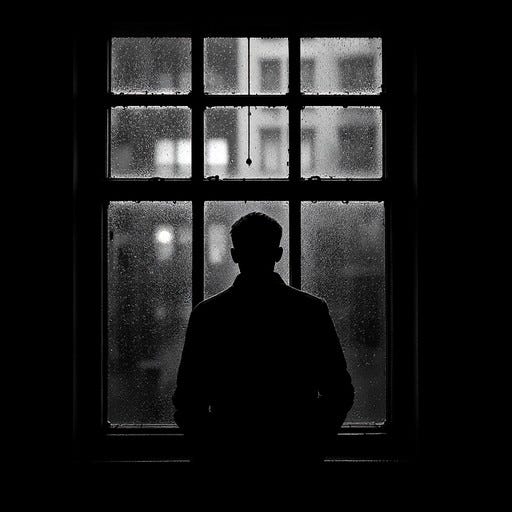
Like you, I move through many rooms in a day. The room of parenthood, the room of marriage, the room of the workplace, the room of the masjid, the room of friendships, the room of the public stage. Each has its expectations, its tone, its permissible jokes and its forbidden ones. By evening, when those rooms have emptied and I am alone, I often cannot tell which of those people was me. None of them were false. They were all ‘me’, but different versions of ‘me’.
I started thinking about this when listening to a Nasheed by Zain Bhikha, “Who I am”, and revisited it on a recent holiday, during a conversation with a close friend. We had been talking about something else when it drifted into the question of who I am beneath all the versions of myself I carry. I have been turning it over since.
Which version is the real one? The one that appears most often, since repetition shapes character? The one that arrives when I am alone, with no audience to perform for? The one that surfaces under pressure, when the polish wears thin? Or the one I have rehearsed most successfully, the version I have practised until it almost feels like home? None of these answers, on its own, is honest.
If I am usually calm, respectful, helpful, serious, it is tempting to call that my character. But character and habit are not the same thing. A mask worn long enough begins to fit the face. Some of what I display has become genuine through repetition, by the mercy of Allah and through a relentless tarbiyah given by my parents. Some has simply survived because it served me. It got me accepted, helped me lead, kept me out of trouble, won me a measure of approval. Habit does not always lie, but it does not always tell the truth either.
There is another reason the mask stays on, and it is one I am slower to admit. It is not only worn for approval. It is worn because some part of me suspects I do not really belong in the rooms I am standing in. The headteacher chairing the meeting, the imam giving the khutbah, the founder presenting to a room of strangers, the father trying to look as though he knows what he is doing. There is always a part of me braced for the moment someone realises I should not be here. The mask becomes armour against being found out. We call this imposter syndrome now. The experience underneath the label is older. It is the suspicion that the role is bigger than the person carrying it, and that any minute now the gap will show.
Next week is the kind of room I mean. I will be sitting with headteachers on six-figure salaries, leading larger schools with longer track records, fluent in the leadership vocabulary the room takes for granted. I am a square peg trying to force itself into a round hole. It would be easy to become malleable - to shave off the edges that do not belong, soften the parts of my background that might mark me as different, present a version of myself and my life the room can accept without friction. None of it is a lie exactly. All of it is a squeeze. And the squeeze, repeated across enough rooms over enough years, drains something it is hard to name.
What I want, and what I am still learning to do, is the reverse. To stop shaving the peg to fit the hole, and to let something of my own shape stay in the room. To stay Muslim in vocabulary and bearing without softening it, to mention Allah where mentioning Him is the truth, to let the parts of my background that feel out of place sit there without explanation. The pull of fitting in is older and quicker than the pull of staying whole, and rooms reward fitting in immediately. The aim, when I am being honest, is to change the shape of the hole rather than to keep moulding the peg.
It would be easier if I could decide once that the core is something internal rather than external. Not the display, not the habit, but the principles I carry from room to room: honesty, salah, the dignity of the person in front of me, the refusal to lie about Allah or about what I believe. If that is the answer, then the question of identity stops being about which version of me is most real, and becomes about which principles still hold when no version of me is paying attention. The difficulty is that principles do not float free of the rooms. They have to be carried through them, and the rooms test them.
There is also the question of why I do good in the first place. I would like to believe my reasons are clean. They are not, and I suspect this is something most of us share. We help because people have rights over us and because Allah has commanded it. We also help because being useful makes us feel worthy, and because being needed protects us from a fear that without our usefulness we might not matter.
إِنَّمَا الْأَعْمَالُ بِالنِّيَّاتِ
"Actions are only by intentions." (Bukhārī and Muslim)
Islam weighs the engine beneath the deed, not only its outward shape. This is not a verdict that should make us stop helping, because the work still serves people, and abandoning good because the intention is impure is itself a trick of the nafs. It is a verdict that should make us keep working while asking Allah to purify why we work. The deed continues; the intention is brought back, again and again, to be repaired.
Adapting to context is not automatically hypocrisy. The Prophet ﷺ was tender with children, firm where firmness was needed, playful with his family, dignified before delegations, and steady under threat. He was the same man giving each room its right. The distinction lies underneath. A mask asks: what must I become so they approve of me? Prophetic character asks: what does Allah require from me here? A mask shifts because it fears people. Character adapts because it fears Allah and honours people. The outward behaviour can look almost identical. The orientation of the heart is what separates the two.
Perhaps the real me is the one who appears when no one is watching. There is truth in this, and Islam takes the private self seriously. But being alone exposes desire more than it reveals character. Sometimes responsibility is what teaches the self to be better. A child's need can train patience that solitude never demanded. A spouse's right can soften a hardness that being alone never touched. None of this is necessarily performance. It can be tarbiyah. The Prophet ﷺ said:
إِنَّ لِرَبِّكَ عَلَيْكَ حَقًّا، وَلِنَفْسِكَ عَلَيْكَ حَقًّا، وَلِأَهْلِكَ عَلَيْكَ حَقًّا، فَأَعْطِ كُلَّ ذِي حَقٍّ حَقَّه
"Your Lord has a right over you, your self has a right over you, and your family has a right over you, so give everyone who has a right their due." (Bukhārī)
Islam does not ask me to escape expectations, but to order them under Allah, so that no human voice sits in the seat that belongs only to Him.
Underneath much of this masking, if we are willing to look, sits a sadness, and maybe even a fear. We mask because we do not quite trust that the original is enough. Not polished enough, not confident enough, not religious enough, not relatable enough, not Muslim enough in the right way. So we become chameleons, taking on the colour of whichever room we have entered. It shows up in small things. Think of how easily a name like Mohammed becomes a Mo. As an affectionate shortening between people who love each other, that is one thing. As a preferred form because the full name feels too heavy for the room, because of an anticipated pause, a misreading, a being marked as different, it is something else. It is a small surrender, easy to justify and easy to repeat, and the surrenders accumulate. Like small pebbles form mountains, small concessions form a new identity.
I once asked an audience about identity, and the conversation drifted, as it always does, into ethnicity and labels. I said Muslim, British, Indian. I noticed I could substitute British for another nationality, or Indian for another heritage, and still be recognisably myself. Muslim was the one I could not swap. The other two matter because they shape my language, my family, my humour, my sense of belonging. They are not the deepest centre. Islam answers the question that lies beneath all the others: to whom do I belong?
قُلْ إِنَّ صَلَاتِي وَنُسُكِي وَمَحْيَايَ وَمَمَاتِي لِلَّهِ رَبِّ الْعَالَمِينَ
"Say, my prayer, my sacrifice, my life and my death are all for Allah, the Lord of all worlds." (Qur'an 6:162)
The verse gathers a scattered self into one ownership. Without this, the soul ends up serving too many masters at once:
ضَرَبَ اللَّهُ مَثَلًا رَّجُلًا فِيهِ شُرَكَاءُ مُتَشَاكِسُونَ وَرَجُلًا سَلَمًا لِّرَجُلٍ هَلْ يَسْتَوِيَانِ مَثَلًا
"Allah gives the example of a man owned by quarrelling masters, and a man devoted wholly to one master. Are the two equal?" (Qur'an 39:29)
People-pleasing is exactly this. The soul rented out to a crowd of masters whose demands contradict one another, exhausted from changing colour, never at rest because no two audiences want the same shape.
If there is an original to return to, Islam calls it the fiṭrah. The Prophet ﷺ said:
كُلُّ مَوْلُودٍ يُولَدُ عَلَى الْفِطْرَةِ، فَأَبَوَاهُ يُهَوِّدَانِهِ أَوْ يُنَصِّرَانِهِ أَوْ يُمَجِّسَانِهِ
"Every child is born upon the fiṭrah, then his parents make him a Jew, a Christian, or a Magian." (Bukhārī and Muslim)
The fiṭrah is the original human inclination towards Allah, towards truth, towards goodness and recognition of what is real. The original self may be immature, awkward, in need of correction; it is not worthless. Islam does not seek to demolish the self and replace it with a performance. It seeks to purify it and return it to Allah. Underneath all the explanations I offer myself, there is something that already knows the truth:
بَلِ الْإِنسَانُ عَلَىٰ نَفْسِهِ بَصِيرَةٌ وَلَوْ أَلْقَىٰ مَعَاذِيرَهُ
"Rather, man is a witness against himself, even though he may put forward his excuses." (Qur'an 75:14–15)
We know when our kindness carries a thread of resentment. We know when our patience is really avoidance. We know when our humility wants to be noticed. We know when our service is mixed with the need to matter, or with the need to silence the suspicion that we are not enough for the rooms we are being asked to fill. The excuses come ready-made. The witness underneath them is harder to silence.
I have taken up running more than once (as hard is it is to believe!). It has never lasted longer than a couple of weeks, and the reason has not been my legs. Running leaves me alone with my thoughts in a way ordinary life does not. There is no meeting to chair, no class to teach, no message to reply to, no khutbah to prepare, nothing to manage except my own breathing and my own mind. The thoughts that surface in that quiet are the questions I usually have a good reason to postpone. The mask slips for an hour, and I find myself reluctant to meet what is underneath.
We would like to say that we are slaves of Allah, and that this should be enough. In one sense, it is. In another, it does not feel enough, because we keep noticing that our prayer is not as it should be, our service is not as it should be, our goodness has its cracks. The heart itself is unsteady, which is why the Prophet ﷺ used to say:
يَا مُقَلِّبَ الْقُلُوبِ، ثَبِّتْ قَلْبِي عَلَى دِينِكَ
"O Turner of hearts, keep my heart firm upon Your religion." (Tirmidhī)
The instability is not a failure unique to me. It is part of being human. The answer is not despair. It is return.
قُلْ يَـٰعِبَادِيَ الَّذِينَ أَسْرَفُوا عَلَىٰ أَنفُسِهِمْ لَا تَقْنَطُوا مِن رَّحْمَةِ اللَّهِ
"Say, My servants who have transgressed against themselves: do not despair of Allah's mercy." (Qur'an 39:53)
He still calls them His servants. Not failures. Not imposters. Not discarded. We were never asked to be self-sufficiently good, or self-sufficiently competent, or convincing in every room. We were asked to be slaves: honest, repentant, striving, broken before Allah, and still moving.
Perhaps the real me is not the one who appears alone, nor the one who surfaces under pressure, nor the identity I display the most. The real me is what I (try to) keep returning to when the mask slips. I return to Allah. I return to repentance. I return to truth, even when it is uncomfortable. I try to return to the fiṭrah, however many layers of habit lie over it. I return to the principles I carry, even imperfectly, into rooms that ask me to put them down.
I will keep helping, and ask Allah to purify the help. I will keep serving, and ask Allah to free me from needing to be seen. I will keep being respectful, and ask Allah to make it character rather than performance. I will keep adapting to my roles, because the roles are real, but I will ask Allah not to let me disappear inside them.