
One Year On
A year ago today, at 08:09 BST, Air India Flight 171 came down in Ahmedabad and took the lives of three of the people we loved most.
A year ago today, at 08:09 BST, Air India Flight 171 came down in Ahmedabad and took the lives of three of the people we loved most. Akeel, Hannaa, and their daughter Sara, four years old, my little boy’s best friend. I have spent twelve months trying to find the words. This is as close as I have come.
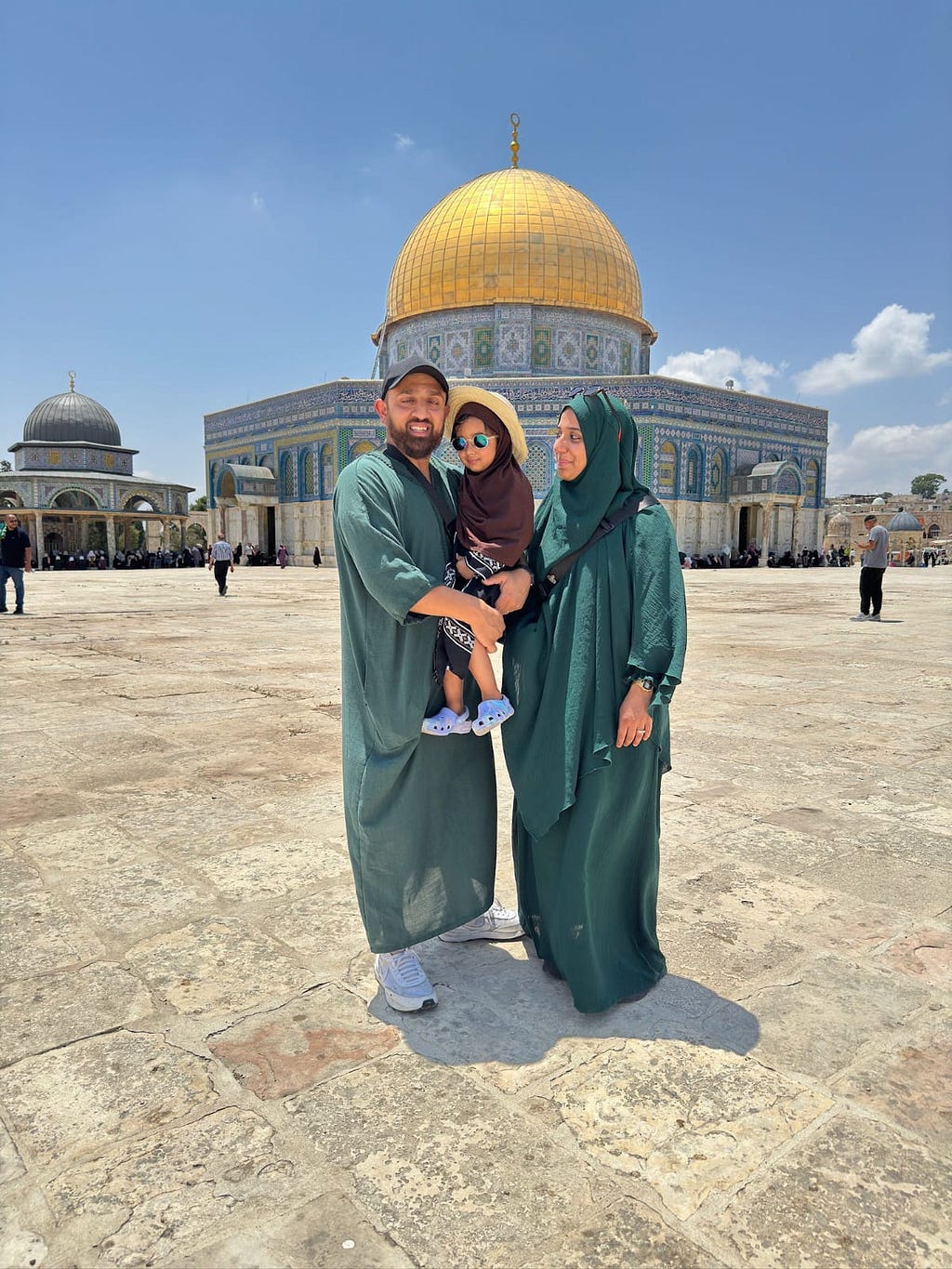
Thursday 12th June 2025. 10:13 am. I sat at my desk, opened the BBC News website and a red breaking news alert flashed in front of my eyes. A plane had crashed in India. I didn’t make much of it. I saw the video of the plane becoming a fireball and thought, “Poor souls.” These awful tragedies happen, but never to us. I was under the impression Akeel, Hannaa and little Sara were flying back from Mumbai. And they definitely wouldn’t be flying Air India. How wrong I was. I remembered Akeel’s business in Ahmedabad. Maybe he did fly out from there. A slight panic settled in. I messaged the mutual groups we were on. Was Akeel flying out from Ahmedabad? When it was confirmed, panic really set in.
I froze, then rushed my brain into action. I had all my screens open in front of me. My double PC desktop, my laptop, my phone. Checking here, asking there, answering everywhere. Everyone I spoke to sounded panicked, grown men crying. Nobody knew anything. We then heard they were on the flight. And then we found the flight manifest, leaked online, confirming their presence onboard. Disbelief. The tears streamed down my face.
By this time, the front office had caught wind of what was going on. The morning admin came in and told me to go home. Never. So she called reinforcements. The office started to fill up. Sara’s teachers, relatives, whoever had heard what might be happening. There was no chance I was going home. What would I do at home? My wife was barely two months postpartum. There is no way two stressed-out individuals were better than one. My heart was pumping so fast I could barely catch my breath.
Then there was a bit of hope. Someone sent a photo of them, claiming they were safe. Then a voice-note from someone, an outright liar, may I add, who said he saw them and spoke to them, and that they were fine. Then a message telling us they were ok. A glimmer became an expectation. Alhamdulillah, they were ok. But the fireball video told another story. We pushed our Indian contacts to get on the ground, to see the reality, to find them, speak to them. We even laughed on our groups about how they would tease and mock us when they found out we were worried for them. Amateurs. Wet-wipes. Lettuces.
The teasing never came.
What came instead were photos of the bodies, charred, broken, strewn across the ground. The worst thoughts run through your mind. I contacted our local MP and made call after call for confirmation, but nothing, despite his best efforts. Eventually, confirmation came that there were no survivors, bar one. Then came the thankless task of informing both mothers, and I cannot find the words to describe that boulder of a responsibility. As it happened, I did not need words to tell them. The look on my face, the silence, the tears. Everything told the story nobody wanted to hear.
Value who you have
You only value people after they die. You only know what they meant to you when they are not here. We are lucky enough to have people in our lives who stood by us, who shared our moments with us, who still make us laugh, whose selflessness is so unique and refreshing. They are our people now. And the past 12 months would have been impossible without them.
I remember our extended family, people we’d only been introduced to a couple of years before they passed, arriving on the day itself, from Preston and Leicester. They stayed with us, and returned weekend after weekend, to grieve, to celebrate, to mourn, to show appreciation for the new bonds we’d created. These people we cannot take for granted. A tragedy like this only brings us closer together. Alhamdulillah for that.
The stories poured in
After Akeel, Hannaa and Sara left us, the stories poured in, and everyone, it turned out, had their own Akeel and their own Hannaa.
Akeel had a cheeky smile. He was a softie, declaring his love for his wife openly, to her dismay. Jaan, he used to call her. And he was incredibly generous. He never came to sit with friends without bringing something. He was the designated chai-guy, on the tea every time, sometimes great, sometimes burnt. He would rope Hannaa into it too. She was the resident chicken-marinator.
He was also the perennial cheat at card games. We once caught him recording everyone’s hands, and only found out well after the fact. So cheeky, so funny, and the only one who could get away with it. On a trip to Egypt we played a game of Traitors, and the gamemaster chose the two of us as the Traitors. We convinced him to make our wives the Traitors instead, then worked hard to keep the game running to the very end. What a time we had together.
He had a newfound love for padel, so we would play at least once a week. He partnered with my brother, and the two of them went a dozen or so games unbeaten. How honestly he played, I could not tell you. He had a knack of calling out a random incorrect score midgame and hoping nobody noticed. When he was not playing, he would watch his own brother play and playfully berate him for missed shots and bad decisions. The mischief and that cheeky smile will never be forgotten.
I remember my brother-in-law calling Akeel when his car broke down, even though you would imagine I would be his first call, being his only brother-in-law. But that is who Akeel was. Everyone knew they could rely on him. Yes, he sometimes overpromised, but he did it with a smile, and he was always so sincere, so he always got away with it.
He would not let me pay for anything. I once borrowed money from relatives for some housework, and when he found out, he told me off. Why did you not ask me? Why would you want to be in debt to others? He was genuinely offended. And he showed the utmost respect to the Ulama. When my wife and I hosted one of my teachers, who had also been our Hajj guide, Hannaa arranged dessert without being asked, and Akeel insisted on hosting him with us, spending the evening with him, showing genuine affection and love for a man who meant so much to me. My teacher had never taught him, but that was Akeel. He treated my teachers as his own, and his as mine. He had even committed himself to learning the Quran better than he knew it. I found a teacher for him, because he refused to do it with me. He was taken before his first lesson.
He had transformed his life after marriage, moved to Gloucester, and fitted seamlessly into our circle of friends, becoming closer to some of them than even I was. He helped me with the barbecue I held to raise money for the Gloucester zakat fund. He took the initiative to book a fundraiser at the Newport mosque for our primary school, and rather than passing it on to others, took Hannaa and Sara along with him. It was his contribution to the school. Once, he arrived in the early hours of the morning from Morocco and was at a school fundraising barbecue with me just a few hours later. What a guy. His last acts on this earth were calling and messaging friends, asking for details so he could bring them the things they wanted from India. Some people are always at the scene of the crime. Akeel was always at the scene of goodness.
This is why the community rallied around them. Nearly £130,000 has been raised in their name. Snowdon was climbed, with Sulaym among the climbers. Cakes and bakes were sold. A legacy fund was started for families who are struggling.
Hannaa was inquisitive, endlessly so, and she had a licence to cuss. We were both outsiders in the family, but really, unashamedly, we brought life to it. She embedded herself. She was so loving, yet so happy within herself. After every Tafsir lesson I delivered, she would sit and make notes of the talk, then come back to me if anything was unclear. When my wife had our second born, a month or so before they flew out, it was Hannaa who advised her before the birth, and Hannaa who told her own mum to prepare post-partum nutrition for her.
She was kind in ways that do not occur to the rest of us. In February 2025, when I went to visit my Nani, travelling for Umrah first, she sent chocolates with me for her. She had never met my Nani. But this was Hannaa. She insisted. Nobody does that. I don’t do that. The glue between families, with such a pure heart.
When Hannaa had the idea for us to start a YouTube channel, I spoke to some of my teachers, and they were incredibly supportive. The idea was a cartoon animation of Sara and Sulaym, learning about Allah through the miracles of Allah in the natural world, learning the basics of their Deen. To me it was a fleeting thought. We discussed it for one evening at our house, no more. After she passed away, I was given access to her laptop, and I found an entire folder dedicated to the channel. Fifty episodes, every one with a title, every one with a description of what it would cover. We had never discussed that much detail. I only came to know of her work on it after her passing. She had quietly built a whole future for our children, and told no one.
And they were so low maintenance. They offered themselves to us completely, and we did not repay them. They are the only people in our lives who would call in the morning and ask, literally ask, if they could have Sulaym for the day. That was over and above the Fridays. Hannaa would feed him, Akeel would take him to Jum’a, and together they would take him and Sara to soft play. What a time.
And they loved a gathering. When my wife was in labour, waiting for the moment to leave for the hospital, they arranged a barbecue at our house, that being deemed the more reasonable option than going out. We sat around the firepit with other family members. One of the best evenings of our lives. It was them, of course, who were also the first to try the newly built brick pizza oven in the back garden.
The two of them knew my secrets but never judged. They saw the worst of me, but it did not deter them. I never had to pretend around them. I never had to wear a mask. I do it everywhere else, and it is exhausting. Now they are gone, that mask will remain, just changing colour, from person to person, setting to setting.
Akeel was a hypochondriac too, ever since a bout of bad health during COVID. We used to joke that he had a fast pass to the hospital, and that he should really be paying them rent. Of all the ways he imagined going, a plane crash must have been somewhere near the bottom of the list. It goes to show how little we know of our own futures.
They were never meant to fly to India. We had looked at tickets to Turkey together, the six of us plus the baby, but it proved too difficult for us and we opted out. Then they decided on Malaysia. What we plan and what Allah plans are vastly different things. Allah is immensely subtle in His planning, so perfect, yet so confusing to us. Allah plans, and we must simply comply.
Sara and Sulaym
Sara, aged four, was my little boy’s best friend. She would call me molvi, but in her own way, maauuulvi, still ringing in my ears. I would give anything to hear it once more. Sulaym used to call her, in his cute little voice, Sara baby, until she told him to stop. I am not a baby anymore, she said.
They would take Sulaym to the park with Sara. He would insist. When I joined them, I enjoyed leaning into Sulaym’s bravery and naivety. He would try the biggest slides and Sara would join him. Sulaym made Sara courageous, and Sara made Sulaym gentle. I once took Sulaym on a zipwire and pushed him hard on it. Akeel’s face was a picture of distress. Sara just gazed on. Eventually, with a little nudge, she stepped up and had a go too. That is what they meant to each other. Pushing each other, loving each other.
When Sulaym was upset or hyperactive in class, the teacher would watch Sara go over to him and take him to the side. She would calm him down and settle his nerves, like an older sister to a little brother, except she was the younger one. Like her mum, she was incredibly mature, and spoke like a child much older. The classroom staff called the two of them Mr and Mrs.
For Sara alone, I want her to be remembered. Her maturity, her softness, and the impact she had, especially on my son. I remember the marches we went on, the six of us, with friends and family. Hannaa would take the megaphone and shout at the top of her voice, and Sara and Sulaym, pushed along in their buggies, would take the megaphone too, and in a crowd of hundreds of thousands, they would advocate. I remember Sara selling cakes outside her house to raise money for Palestine. What an incredible tarbiya she was given by her mum and her dad.
We recently came across a voice recording of the two of them. Sulaym said he missed Sara and loved her. Sara replied with the same, and invited him to Nuneaton to spend time with her. Her Nani tells us Sara would miss him so much that she would ask for him to come, so they could play together. A minute of two small voices, now one of the most precious things we have.
India
To think of their last few moments haunts me. But I also feel I need to, to try to imagine the raw feeling of it. I imagine the two of them holding hands and praying, clutching on to Sara. Even writing it brings tears. We cannot imagine it. But Allah is merciful, and they would not have felt much, inshaAllah.
I was there in India. While other families struggled with identification, and some were given the wrong remains to bury, we were sent an angel of a doctor who took personal responsibility for the whole process, expedited it, and made sure we got our loved ones back. Allah had preserved their bodies better than most, and I am sure it was their own beautiful character that drew that ease towards them. Just the thought of what it could have been like is harrowing. I was in two minds about writing this at all, but it is the time to write, so I am writing.
I got a degree of closure. Hundreds of others who needed it did not.
As the anniversary approached, a relative from another bereaved family wrote to us. Every family on that flight lost someone they loved, they wrote. A mother, a father, a husband, a wife, a child, a grandparent, a cherished friend. Behind every name was a lifetime that cannot be replaced. For many of those families, the world moved on while their time stood still, and the absence sits with them in the empty seats at dinner tables and in the milestones that will never come. Every family has a story like this one, and every story deserves to be heard. A year on, the families still wait for answers and accountability. Above all, they remember.
Grief without a script
I thought Sulaym was getting better. We got him help, and he enjoys the sessions. But it all seems to be resurfacing. He has lost a sparkle. He remembers her vividly, the coat she liked, the lunch she used to bring, the bag she used to wear. He still speaks of her in the present tense. He calculates her age as though she is still growing. Ask him today: his favourite memory is of Sara, his favourite top is his Sara top, his favourite person is Sara, more than even his mum. His best ever memory is Sara feeding him rice. What a big burden for a small heart to carry. He cries himself to sleep some days. He says he doesn’t want to go to school because Sara isn’t there. We pray on him, we pray for him, we give him whatever we think he needs, and it never seems enough. And when I have to raise my voice or rebuke him, the guilt is overwhelming. This is a child who has just turned six. I forget that far too often. I feel so helpless, so useless. If you cannot protect your own child, who else can you protect?
The people who study grief say children dip in and out of it, sad one minute, playing the next. I see it in him. He laughs in the playground an hour after crying, and then it returns at bedtime, at lunch, at the sight of a bag like hers. So we sit in it with him, and we wait.
As for me, I don’t grieve to any script either. I sometimes just sit on the musalla after salah and stare into an abyss. I have no idea what it does for me. Whether it makes things better or worse, I could not tell you. My wife and I sometimes laugh hysterically at a memory, then cry together in the same sitting. How could these guys just vanish from the face of the earth? How could they all just leave us behind? Apparently this swinging between living and mourning is exactly what grief looks like, and the guilt we feel in the lighter moments is misplaced. Reading that helped, a little. Living it is another matter. I wasn’t always one to cry easily, but now I do, just at the thought of missing these souls. The bond carries on in a changed form. We keep their names in our du’as, their sayings in our mouths. Maauuulvi. Jaan. Chocolates for someone else’s Nani. And the bursts come without warning, at an anniversary, at a coat in a cloakroom, at nothing at all. A year on, they still come.
This is not my first grief. I lost my mother when I was twenty-six. She was fifty-three. I did not imagine anything would ever feel heavier than that. But Allah has His plans, and this past year has taken me through the wringer. It is something we will have to learn to live with. The hole in the heart never disappears. It gets smaller, or, as some say, it gets filled by other things. That has been my route out. I have worked hard to distract myself, to keep busy, to try to forget. But it feels like a facade, a mask, a smokescreen. No time to think, no time to grieve. Even those who doubted my method have become believers.
There was a light in our lives, in our relationships with each other, a light I could see in my wife and in Sulaym, and nobody in the world, or nobody we have yet found, can replicate it. We have tried to put it into words. We have written articles, put our grief and our emotions into prose, shared messages with each other, kept alive the WhatsApp group the four of us had. Words cannot do it justice.
I am reluctant to speak about them too much in company. I do not want to make it about me, when I can at least imagine how difficult it is for others, and I do not want to be the one who kills the mood in a happy crowd. That is part of why I have taken to writing since they passed. I have no other way to express myself, so my words try to do it on my behalf. Sometimes effectively, sometimes less so. But this is all I have left to give.
I torture myself with the messages from that day. I read back through them, then through their videos and their photos, and I drown in sorrow, but also in a great sense of happiness. I am so proud we were that close. I am so happy we enjoyed each other’s company for as long as we did. It could have been worse. Imagine we had lost them earlier. Imagine we had never got to know them at all. Imagine one of the three had survived, and had to carry that loss alone. Allah is just, and He is kind. I just feel lucky we got this moment with them.
The one meant to comfort
I am the one who is meant to be comforting the people. The Imam, the Alim, the mature mind, the one with the right words at the right time. But even I get lost in my own thoughts. Weak moments are natural, human. People think they understand, and they are sincere when they want to help. But honestly, we have no idea what we need. Sometimes it is a shoulder to cry on, sometimes it is someone to take our mind off things, and sometimes it is just somebody to speak to. I look at the others suffering around me and I am geared to help them. It is my bread and butter, my raison d’etre, even to my own detriment. Naive maybe, but sincere I hope. Others had their own unique and special relationships with them, colleagues, the school community who taught Sara, those who knew them as individuals. How do we help them? And I cannot begin to imagine what it is like for the two mothers. They were so incredibly close to each of their children, and only Allah knows how we can help them. Words are not enough.
And there are stages I reach where I make the same du’a Imam Bukhari made, when life became too heavy for him and the earth, for all its vastness, felt constricted. Everything feels meaningless, forced. We live because we have to, we work because we have to. I never thought I would feel this way about anybody besides my parents.
The Prophets grieved
In the lowest moments I go back to the Sunna, because the Prophets grieved too. When the Prophet’s ﷺ infant son Ibrahim passed away, he held him and wept, and when asked about his tears, he said:
تَدْمَعُ الْعَيْنُ وَيَحْزَنُ الْقَلْبُ وَلَا نَقُولُ إِلَّا مَا يَرْضَى رَبُّنَا
“The eye weeps and the heart grieves, but we say only that which pleases our Lord. And indeed, O Ibrahim, we are saddened by your parting.” (Sahih al-Bukhari, 1303)
I hold on to that. Sabr restrains the tongue and the heart from objecting to the decree of Allah, and it leaves the eyes to do what eyes do.
Ya’qub عليه السلام grieved for Yusuf for years, until his eyes turned white from sorrow (Sura Yusuf, 12:84). The Quran records his words without a hint of censure:
إِنَّمَا أَشْكُو بَثِّي وَحُزْنِي إِلَى اللَّهِ
“I only complain of my anguish and my sorrow to Allah.” (Sura Yusuf, 12:86)
Perhaps that is what the staring on the musalla is. A complaint with no words in it, directed to the only One who can mend it.
And for them, there is more than consolation. The Prophet ﷺ counted among the shuhada those who die by burning, by drowning, by being crushed (Sahih al-Bukhari, 2829; Sahih Muslim, 1914). We hope, with full hearts, that Akeel, Hannaa and Sara were received as shuhada, asked nothing in the grave, raised to ranks they never sought. Happy for them? Absolutely. One hundred per cent.
And there have been dreams. People have seen them in Jannah. I saw Akeel as a baby, a sign of forgiveness, inshaAllah. And I dreamt of the six of us sat down to eat together, which I hope means we will be reunited one day.
What now?
I don’t know how to feel, or what is right to feel. Guilt? Been there, done that. Grief? Been there, done that, got the t-shirt. Happy for them? Yes, truly. The overwhelming feeling now is just a dull sadness. I look around me, children laughing, so happy with each other, and then I look at Sulaym. The bond between Sara and Sulaym was irreplaceable, unrepeatable, and he carries its absence at six years old.
We mark the year by checking in on each other, and by appreciating the people who are left behind. That is the minimum lesson we have to learn and live by. Cherish the people around you. They are the ones who will remember you and pray for you when you say goodbye. And prepare something for the akhira, because you have no idea when your Lord will ask you for a meeting.
So we do what the bereaved have always done. We weep and we say only what pleases our Lord. We complain of our anguish and our sorrow to Allah. We keep their names in our du’as, their kindness in our practice, their memory in our children. And when the next burst comes, on an anniversary or out of nowhere, we let it come.
Akeel. Hannaa. Sara. We miss you more than these words have managed to say.
الَّذِينَ إِذَا أَصَابَتْهُم مُّصِيبَةٌ قَالُوا إِنَّا لِلَّهِ وَإِنَّا إِلَيْهِ رَاجِعُونَ
“Those who, when calamity strikes them, say: indeed we belong to Allah, and indeed to Him we return.” (Sura al-Baqara, 2:156)
One year on, we are still saying it.
O Allah, forgive Akeel, Hannaa and Sara, have mercy on them, and raise them among the shuhada in the highest Firdaws. Join them with each other there as they were joined here. Fill their graves with light, and fill their scales with everything written in these words and in every heart that loved them. Grant sabr to the two mothers, to their families, and to every family of that flight. Return the sparkle to Sulaym. And gather the six of us at a table in Jannah, never to be parted again. Ameen.